When I was in grade school, I watched a film called Peege. I remember it was about an old woman in a nursing home, and I remember I cried.
That was a long time ago, and there was a lot about the film I’d forgotten. But the image of a forlorn-looking woman stayed with me across the decades.
I recently rewatched the film, and although the hallmarks of 1970’s filmmaking were almost suffocating at times (melodramatic violin music, the knowing glances of the characters at pivotal moments in the drama), the continued import of the film was unmistakable.
Unmistakable because, despite the passage of 50-some years, the scene has changed very little: a family visits Mom/Grandma (“Peege”) in the nursing home at Christmastime. As they proceed down the hallway, passing the rooms of dazed-looking residents in wheelchairs, one of the parents tells the young-adult grandchildren, “I’m afraid this will be the last visit.”
They arrive in Peege’s room, and over the course of their 15-20 minute visit, they give her Christmas presents, including an impractical red, silky nightgown. They also update her on the grandchildren’s accomplishments: one of them has just been accepted to Colgate University, another has finished an internship at an impressive corporation.
It’s the third grandson—the oldest—who doesn’t engage in the awkward attempts at conversation. He’s thinking of earlier times, and viewers see his memories through a series of flashbacks. He sees an old footstool in the room, the one with an embroidered top that he used to climb on. He sees the homemade cake she always carried out to the picnic table for his summer birthdays, her face full of life and laughter. He recalls how the two of them danced to her Victrola record player, his head barely reaching her waist.
He doesn’t say anything as he’s reliving these memories. His parents and siblings finally exhaust the topics of conversation and get ready to leave, breaking his reverie as they tell him it’s time to go.
He says he’ll be there in a few moments, and after they leave the room, the grandson pulls closer to Peege, takes her hand, and begins talking about the forbidden scary movies they used to watch in the summer at her cottage… just the two of them, a secret from Mom and Dad, she told him. They’d eat ice cream cones afterward.
Peege’s face softens as her grandson talks. At one point, she’s almost smiling.
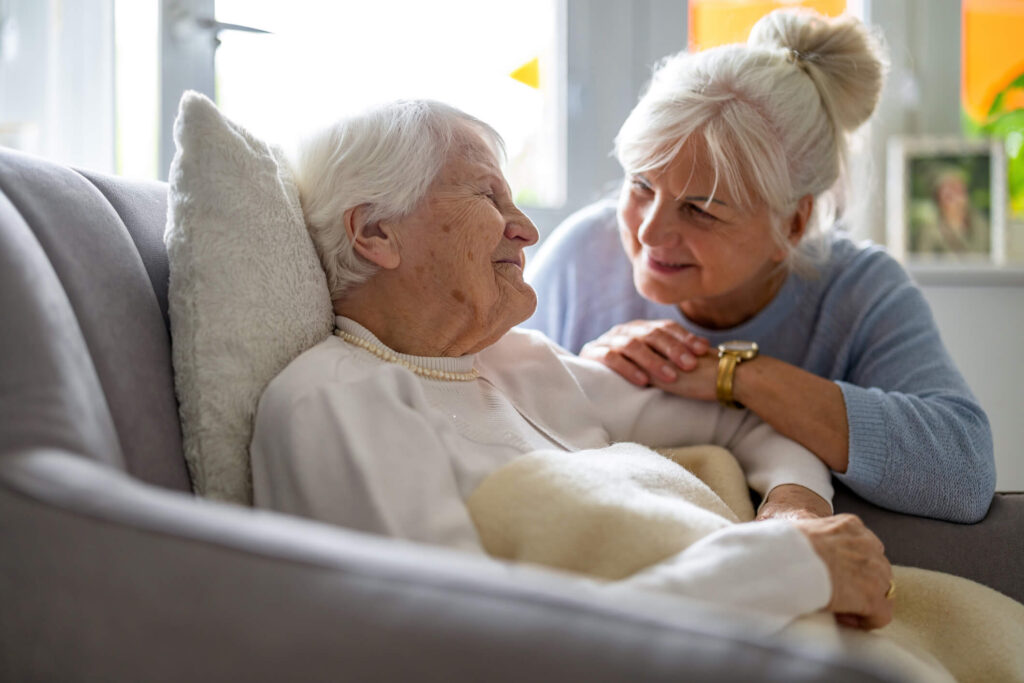
All these years later, families still visit nursing homes. Families visit the people they love, the ones whose minds have been changed by dementia, the ones who don’t have many words left but who still hold beloved and precious memories inside. The ones who remain beloved and precious.
Rosemary Apol-Hoezee, RN, MPH, CPHRM, CDP
Dementia Specialist with the Dementia Institute
Info@Dementia-Institute.org